Key Takeaways
- Tank heaters store hot water and are simpler to install; tankless units heat water on demand.
- Tankless units never run out of hot water but have a flow limit, especially with cold Ottawa winter water.
- Tankless models often need a larger gas line and new venting, which affects installation cost.
- Both types need regular maintenance: flushing tanks and descaling tankless heat exchangers.
When your old water heater starts showing its age, you'll face a big decision: tankless vs tank water heater. Both can supply your Ottawa home with reliable hot water, but they work differently and suit different households. The right choice depends on how your family uses hot water, the space you have, your gas line and venting, and your budget.
Here's a practical, no-hype comparison from the team at KAD Mechanical & HVAC.
How Tank and Tankless Water Heaters Work
Tank (storage) water heaters
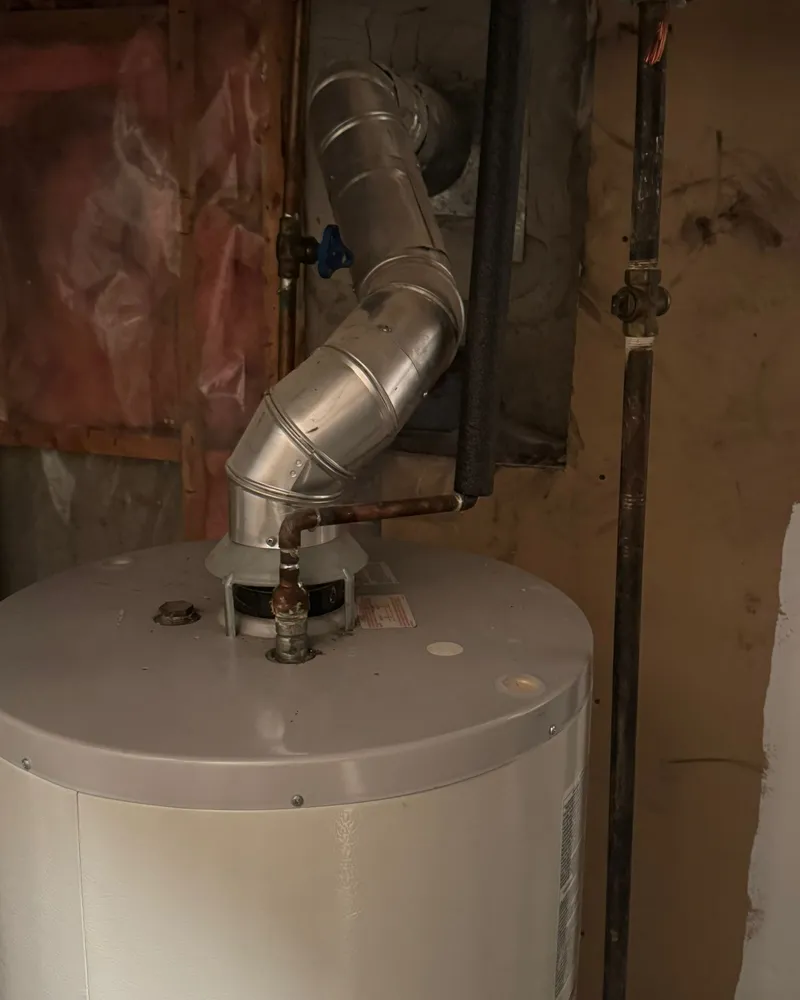
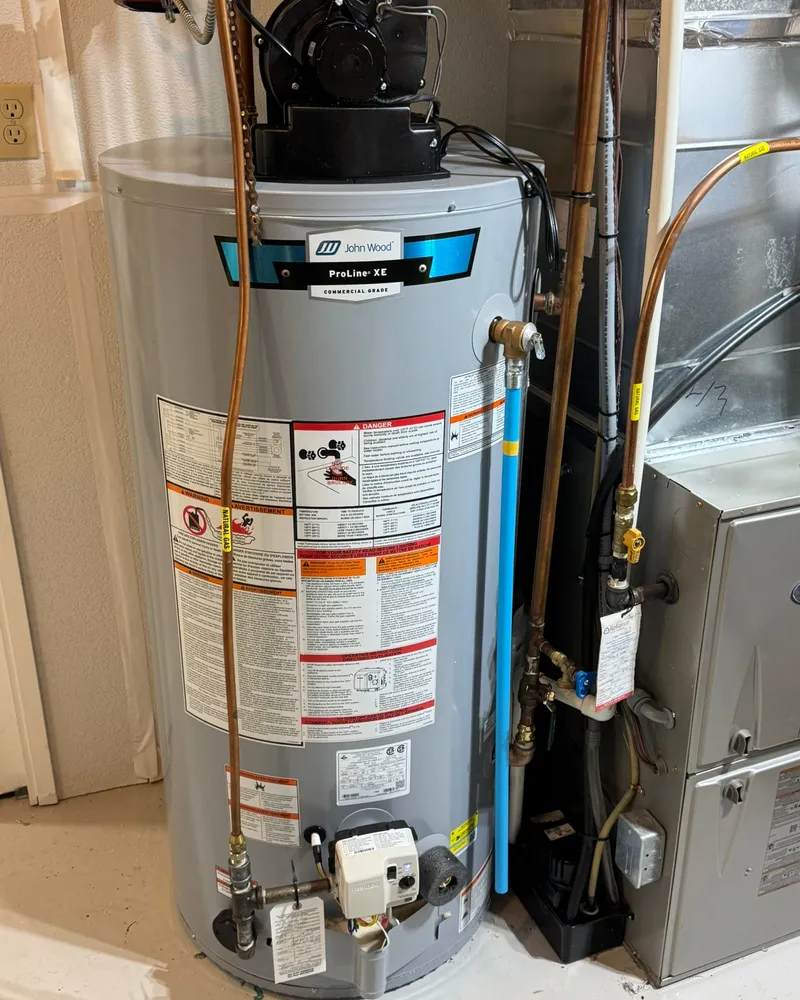
A conventional tank water heater keeps a large volume of water hot and ready to use. When you open a tap, hot water leaves the top of the tank and cold water refills the bottom, where a gas burner or electric element heats it. Once the hot water in the tank is used up, you have to wait for it to recover.
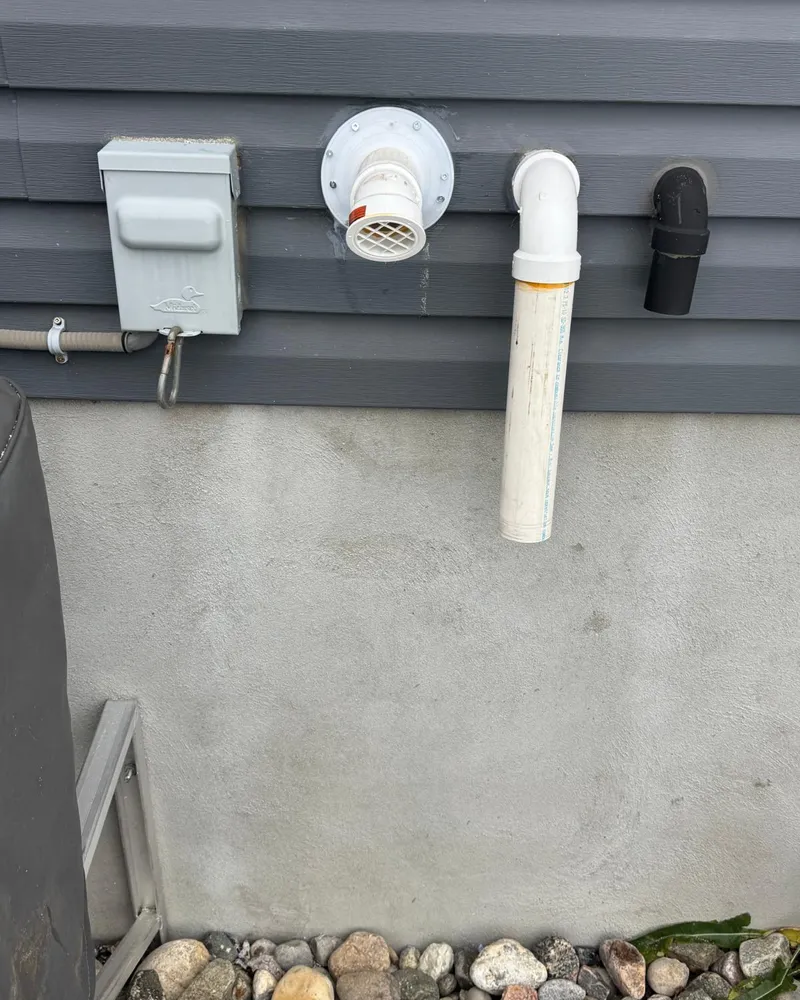
Gas tank heaters come in conventional (atmospheric) vent models, which use a chimney, and power-vented models, which use a fan to push exhaust out through a side wall.
Tankless (on-demand) water heaters
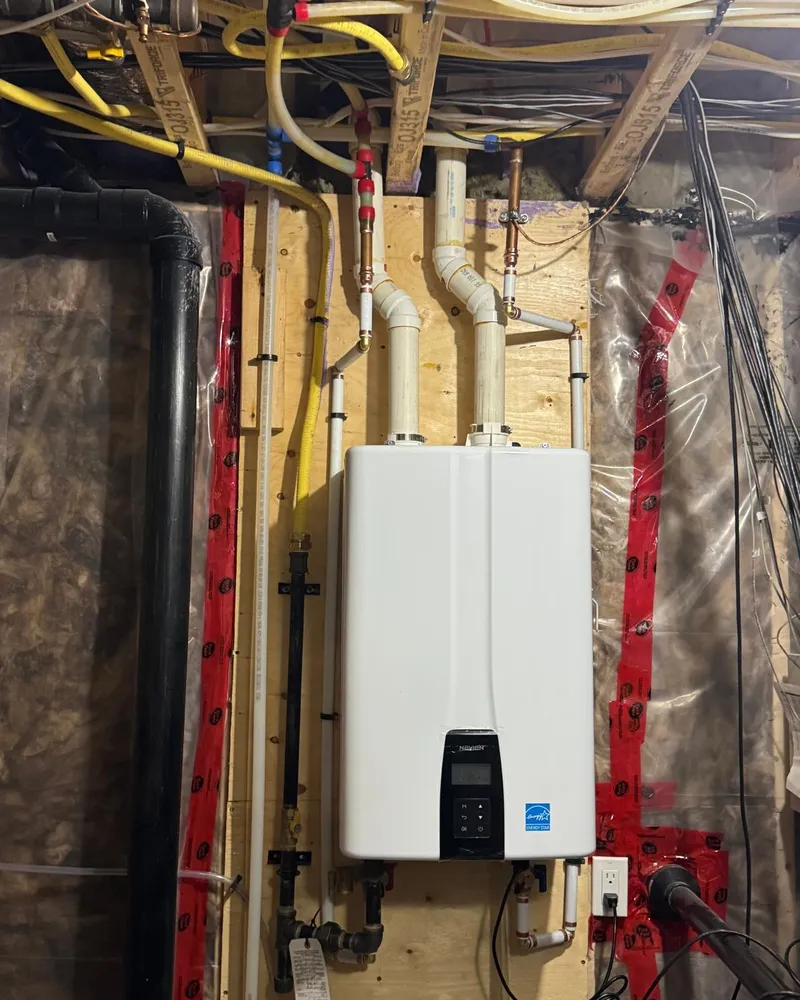
A tankless water heater, sometimes called an on-demand or instantaneous heater, has no storage tank. When you turn on a hot tap, water flows through a powerful heat exchanger and is heated as it passes. Most whole-home tankless units in Ottawa are high-efficiency gas condensing models that vent through PVC pipe.
Tankless vs Tank Water Heater: Side-by-Side Comparison
| Factor | Tank | Tankless |
|---|---|---|
| Hot water supply | Limited to tank size, then recovery time | Continuous, but limited by flow rate |
| Space | Large footprint on the floor | Compact, wall-mounted |
| Standby heat loss | Some heat lost keeping water hot | No storage, so minimal standby loss |
| Installation | Usually simpler for a straight replacement | Often needs gas line and venting changes |
| Maintenance | Periodic flushing and anode checks | Periodic descaling and filter cleaning |
| Upfront cost | Generally lower | Generally higher |
Get a Free Quote From Certified Ottawa Technicians
Upfront pricing • No hidden fees • Certified technicians
Ottawa Factors That Affect the Decision
Cold incoming water in winter
This is the most overlooked factor. A tankless heater's output depends on how much it has to raise the water temperature. In January, the water entering your Ottawa home from the municipal supply or a well is much colder than in summer. That means a tankless unit can deliver less hot water per minute in winter than its summer performance suggests.
A properly sized tankless unit accounts for winter water temperatures. An undersized one may struggle to run two showers and a dishwasher at once during the coldest months, when everyone wants a long hot shower.
Your gas line and venting
Tankless gas water heaters have a high burner input when they fire. Many older homes in Alta Vista, Westboro and Nepean have gas lines sized for a tank heater and a furnace, not a high-demand tankless unit. Upgrading the gas line, installing new venting and adding a condensate drain are common parts of a tankless installation.
All of that gas work must be done by a TSSA-licensed gas technician in Ontario. Never attempt to modify gas piping or venting yourself.
Space in your mechanical room
Newer homes in Kanata, Barrhaven and Orleans often have tight mechanical rooms shared with the furnace, water softener, sump and storage. Freeing up floor space is a real advantage of a wall-mounted tankless unit, especially if you're finishing the basement.
Water hardness
Minerals in water can build up as scale. In a tank, scale settles as sediment. In a tankless unit, scale can coat the heat exchanger and reduce performance. Regular descaling, and sometimes a softener or scale filter, keeps a tankless heater running well.
Pros and Cons of a Tank Water Heater
Pros:
- Lower upfront cost and usually a simpler swap-out.
- Handles several fixtures at once well, as long as the tank has hot water.
- Familiar, proven technology that any qualified technician can service.
Cons:
- You can run out of hot water during high-demand periods.
- Standby heat loss from keeping water hot around the clock.
- Larger footprint and a typically shorter lifespan than tankless.
Pros and Cons of a Tankless Water Heater
Pros:
- Continuous hot water; no waiting for a tank to recover.
- Compact, wall-mounted design saves floor space.
- No standby loss, which can lower Enbridge Gas usage for many households.
- Typically a longer service life with proper maintenance.
Cons:
- Higher upfront cost, especially if gas line and venting upgrades are needed.
- Flow-rate limit, which matters most in winter.
- Needs regular descaling to protect the heat exchanger.
- A brief delay or "cold water sandwich" on quick on-off use with some models.
Maintenance and Lifespan: What to Expect
Neither option is maintenance-free. A tank heater benefits from periodic flushing to clear sediment and an anode rod inspection every few years. The anode rod is a sacrificial metal rod that corrodes so your tank doesn't; once it's used up, the tank itself starts to rust.
A tankless heater needs periodic descaling of its heat exchanger and cleaning of the inlet filter screen. Most units also report error codes when something is off, which makes diagnosis faster.
With regular care, tankless models typically outlast tank models. Without it, either type can fail early. If you go tankless, plan on professional service as part of the ownership cost, not an optional extra.
What about electric options?
Some Ottawa homes don't have natural gas, or the owners want to move away from it. Electric tanks are widely available and simple to install. Whole-home electric tankless units exist but usually require a very large electrical supply, which many homes can't support without a panel upgrade. Point-of-use electric heaters can also serve a single distant sink or bathroom. Any of these choices will show up on your Hydro Ottawa bill rather than your Enbridge Gas bill.
Tankless vs Tank Water Heater: Which Is Right for You?
A tank water heater often makes sense if you want the lowest upfront cost, have a smaller household, have plenty of space, or your gas line and chimney are set up for a straight replacement.
A tankless water heater often makes sense if you have a larger family, run out of hot water often, want to free up space, plan to stay in the home for many years, or are already updating your mechanical room.
Costs vary with the model, your existing gas line, venting route and any plumbing changes, so it's worth getting a quote based on your actual home. Our TSSA-licensed technicians provide upfront pricing with no hidden fees and handle water heater installation from start to finish, including gas connections.
Already have a water heater you want to keep running well? Book water heater maintenance to flush, descale and inspect it.
Talk to a Certified Technician Today
Call (613) 790-2675 or request your free quote online — we respond fast.
Still deciding? Request a free quote, send us a question or call (613) 790-2675. KAD Mechanical & HVAC has served Ottawa, Kanata, Nepean, Barrhaven and Orleans for more than 10 years.
Frequently Asked Questions
Will a tankless water heater work well in Ottawa's winters?
Yes, if it's sized correctly. Incoming water is much colder in winter, which reduces how much hot water a tankless unit can deliver per minute. A proper sizing accounts for this.
Do I need a bigger gas line for a tankless water heater?
Often, yes. Tankless units have a high gas input, and many older homes need a gas line upgrade. That work must be done by a TSSA-licensed gas technician.
Which lasts longer, tank or tankless?
Tankless water heaters typically last longer than tank models when they're descaled and maintained regularly. Lifespan for either type depends heavily on water quality and maintenance.
Can I replace my tank with a tankless unit in the same spot?
Usually, but the installation may need new venting, a condensate drain and gas line changes. We assess your space and give you an upfront quote before any work begins.
Certified, TSSA-licensed heating, water heater and gas technicians serving Ottawa, Kanata, Nepean, Barrhaven and Orleans for 10+ years.