Key Takeaways
- Tank water heaters commonly last around 8 to 12 years; tankless units often last considerably longer.
- Sediment, hard water, high temperature settings and a depleted anode rod shorten lifespan.
- Flushing the tank and checking the anode rod are the two most effective maintenance steps.
- Rusty water, leaks, rumbling noises and slow recovery are signs it's time to plan a replacement.
Most homeowners don't think about their water heater until it stops working. But if you're wondering how long does a water heater last, you're already ahead of the game. Knowing your heater's age and condition lets you plan a replacement on your schedule, instead of during a cold February morning in Ottawa with a puddle on the basement floor.
Here's what to expect from tank and tankless water heaters, what shortens their life, and the maintenance that can help yours go the distance.
How Long Does a Water Heater Last on Average?
Lifespan depends heavily on the type of heater, water quality, installation and maintenance. As a general guide:
- Gas tank water heaters: commonly around 8 to 12 years.
- Electric tank water heaters: similar to gas, sometimes a little longer because there's no combustion wear.
- Tankless water heaters: often well beyond a tank's lifespan, with regular descaling and service.
These are ranges, not guarantees. We've seen well-maintained tanks outlast them and neglected tanks fail much sooner.
How to find your water heater's age
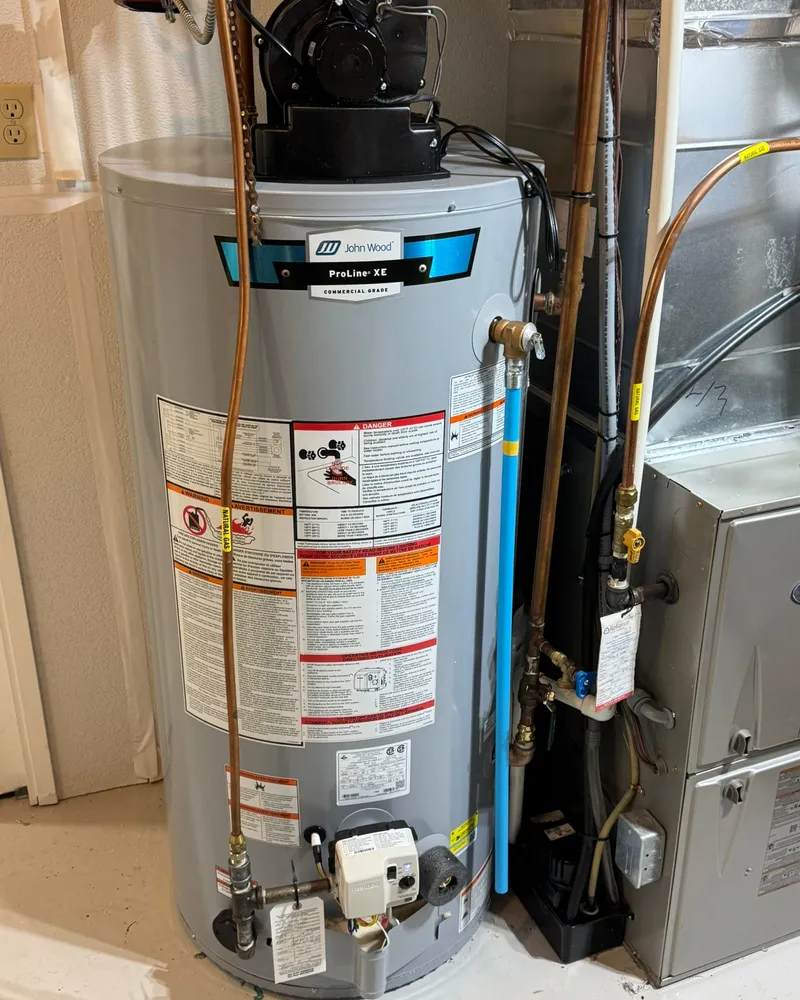
Look for the rating plate on the side of the tank. The manufacture date is usually encoded in the serial number; many brands use the first few characters to indicate the month and year. If you can't decode it, a technician can tell you during a maintenance visit, or you can take a clear photo of the label when you contact us.
How Long Does a Water Heater Last? It Depends on These Factors
Several factors can cut a heater's life short, and most of them are within your control.
Sediment build-up
Minerals in water settle at the bottom of a tank as sediment. Over time, that layer insulates the water from the burner, causing overheating at the base of the tank, more stress on the steel, and those familiar rumbling or popping sounds.
A depleted anode rod
Inside every tank is an anode rod, a metal rod designed to corrode instead of your tank. It's called a sacrificial anode for a reason: once it's used up, the water starts attacking the tank lining, and rust and leaks follow. Many tanks fail simply because nobody ever checked the anode.
Hard water
Harder water speeds up both sediment build-up and scale on tankless heat exchangers. A water softener helps, but softened water can also wear anode rods faster, which makes regular checks even more important.
High temperature settings and heavy use
Very high thermostat settings increase scale formation and stress on components. A large household with heavy daily use also puts more cycles on the heater.
Installation issues
Poor venting, missing expansion tanks where they're needed, incorrect gas pressure or an undersized unit all add wear. Proper installation by a TSSA-licensed technician sets your heater up for a full service life.
Get a Free Quote From Certified Ottawa Technicians
Upfront pricing • No hidden fees • Certified technicians
Water Heater Maintenance: Flushing and Anode Rod Checks
The good news is that a little maintenance goes a long way. Here's what helps most.
Flushing the tank
Flushing drains sediment out of the bottom of the tank. A typical flush involves turning the heater off or to vacation mode, shutting the cold water supply, connecting a hose to the drain valve, draining until the water runs clear, then refilling and restarting.
Flushing an older tank that's never been flushed can sometimes stir up sediment that clogs or damages the drain valve, so it's worth having a professional do the first flush. Many Ottawa homeowners have their heater flushed annually as part of routine service.
Inspecting and replacing the anode rod
The anode rod should be inspected every few years. If it's worn down to the core wire or heavily coated, it's time to replace it. Replacing an anode rod is far less expensive than replacing a tank, and it can add years of life to a heater that's otherwise in good shape. Removing a seized rod takes the right tools, and some homes lack overhead clearance, so this is usually a job for a technician.
Descaling a tankless water heater
Tankless units don't have a tank to flush, but their heat exchanger needs periodic descaling to remove mineral build-up. Most also have an inlet filter screen that should be cleaned. Skipping this is one of the main reasons tankless units underperform.
Other maintenance checks
- Test the temperature and pressure (T&P) relief valve.
- Inspect venting and connections for corrosion or gaps.
- Check the burner and flame on gas models.
- Look for leaks at fittings and the base of the tank.
- Confirm the temperature setting is safe and efficient.
All of this is covered in our furnace and water heater maintenance service, and it's easy to book alongside your annual furnace tune-up before Ottawa's −25 °C cold snaps arrive.
Signs Your Water Heater Is Near the End
- Rusty or discoloured hot water, which can point to tank corrosion.
- Water pooling around the base of the tank.
- Rumbling, popping or banging from heavy sediment.
- Hot water runs out faster than it used to.
- Longer recovery times between showers.
- Frequent repairs on a unit that's already older.
- Higher Enbridge Gas or Hydro Ottawa bills with no change in use.
A leaking tank can't be repaired. If you see water at the base, shut off the cold supply and call for service. If you smell gas at any point, leave the home and call Enbridge Gas or 911 from outside.
Should You Replace Before It Fails?
If your tank is near the end of its typical lifespan and showing warning signs, planning a replacement makes sense. You'll get to compare options, such as a tank versus tankless, without the pressure of a sudden failure. That's especially true in finished basements in Kanata, Barrhaven and Orleans, where a sudden leak can damage flooring and drywall, and in older homes in Westboro and Alta Vista where tanks are often tucked into tight spaces.
Costs vary with the type of heater, size, venting and any gas line updates. Our certified team handles water heater installation with upfront pricing and no hidden fees.
Talk to a Certified Technician Today
Call (613) 790-2675 or request your free quote online — we respond fast.
Want to know how much life your water heater has left? Request a free quote or call (613) 790-2675 to book maintenance or a replacement assessment anywhere in the Ottawa area.
Frequently Asked Questions
How long does a water heater last in Ottawa?
Tank water heaters commonly last around 8 to 12 years, while tankless units often last longer. Water quality, installation and maintenance make a big difference either way.
How often should I flush my water heater?
Many homeowners have their tank flushed about once a year. Homes with harder water or heavy use may benefit from more frequent flushing.
What does the anode rod do?
The anode rod is a sacrificial metal rod that corrodes instead of your tank. Once it's used up, the tank starts to rust. Checking it every few years and replacing it when worn can extend your heater's life.
Can a leaking water heater be repaired?
Leaks from a fitting or valve can sometimes be fixed, but a leak from the tank itself means the tank has failed and needs replacement.
Certified, TSSA-licensed heating, water heater and gas technicians serving Ottawa, Kanata, Nepean, Barrhaven and Orleans for 10+ years.
Next article: Rent or Buy a Water Heater in Ottawa? An Honest Look at Rental Contracts vs Owning